


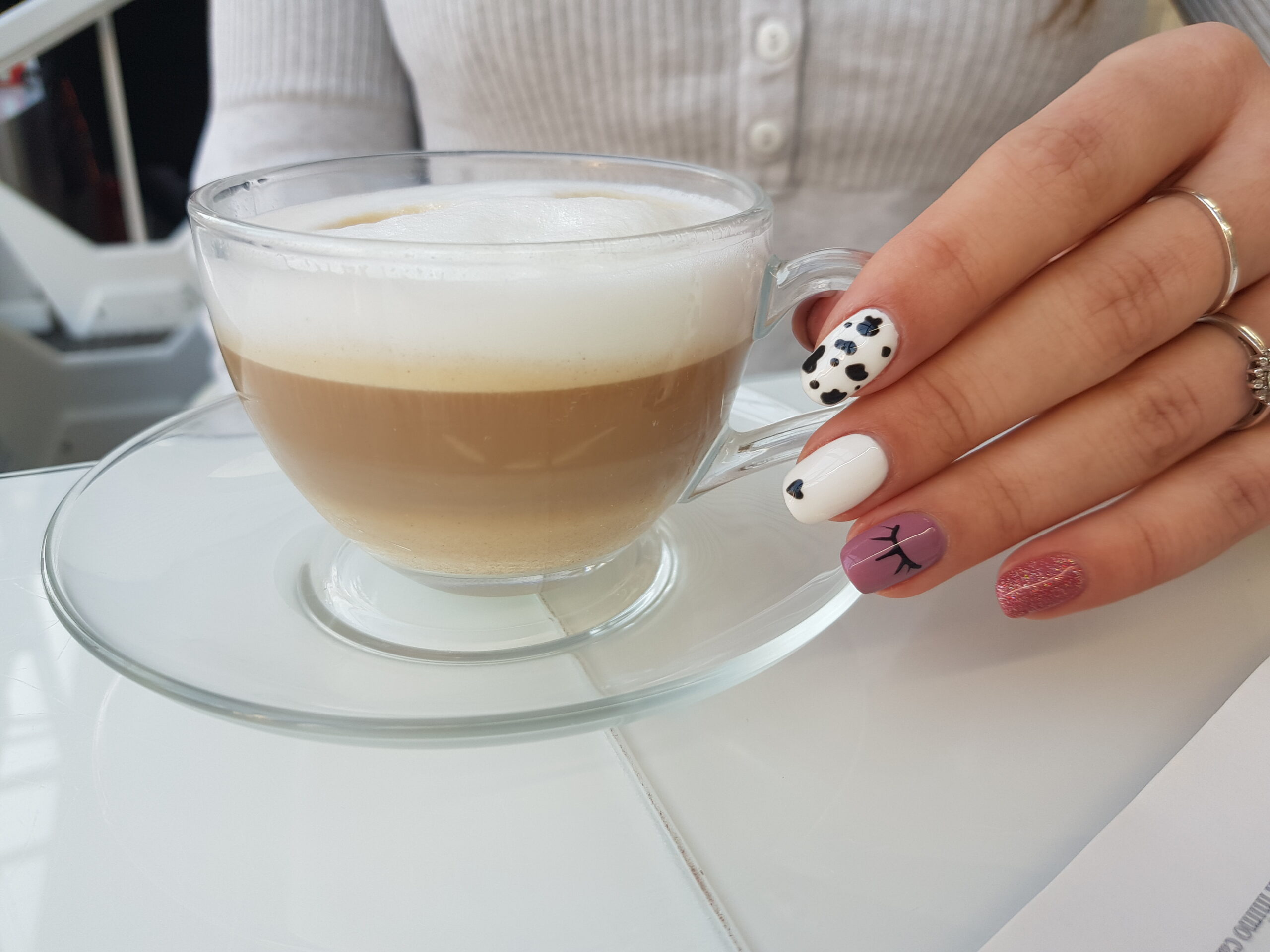
Caffeine – the hero we have and don’t deserve?
Home, work, children, circle of friends. Career advancement, household responsibilities and helping those closest to our hearts. Colloquially speaking, we have a lot of things on our minds every day. Sometimes the only moments of respite are those precious minutes at breakfast with a mug of coffee or tea in hand before we find ourselves in a galloping rhythm of events. If only for this reason, many people who consume caffeine, regardless of its form, consider it a salve for getting through another tiring day.
We rarely compare the contents of our cup to a pill or white powder, even though that is in fact what we consume every day. The effects of caffeine remain the same no matter what form we take it in – in coffee, tea, sodas or energy drinks. Let’s take a closer look at how caffeine abuse affects the condition of our nail plate.
“Stressed” nails are not a good look
Thinking about an upcoming event or another looming deadline only entices us to consume another cup of the magical beverage that will keep us going. However, according to the National Institute of Mental Health, it is in these situations that we should avoid caffeine. Why? Under increased stress, cortisol, the stress hormone, is secreted in our bodies. Studies show that the consumption of a caffeinated beverage contributes to an increase in the level of this hormone almost twice. As a result, we may have temporarily more energy, but this is predicated on increased levels of anxiety or nervousness.
We do not hide the fact that this is bad news for our nails. Filled with such emotions, we want to relieve them in some way. Some work by patting the keyboard at the speed of light. Others bite their nails or tap them against the first available surface. As we can see, the ways of dealing with tension are different, but their effects are the same. Each of these tics leads to a violation of the integrity of the nail plate thus exposing it to mechanical injury. Seemingly a barely visible triviality, but such weakening of the nails will be felt for the next few months and will require appropriate care.
Nail plate deprived of nutrition
Caffeine is a substance that is well absorbed by our body. We can feel the effects of its action already within 5 – 30 minutes immediately after consumption. One of them is more frequent visits to the place where even the king walks resulting in dehydration of the body. Surprisingly, this condition can persist for up to 12 hours. The rapid expulsion of water from the body and the failure to replenish it along with electrolytes results in the leaching of nutrients.
In addition, we must not forget that caffeine is one of the inhibitors of adenosine receptors, a substance that causes feelings of sleepiness and fatigue. It is thanks to caffeine that we do not succumb to these feelings, but as it happens in life, nothing is free. Because of its properties, caffeine negatively affects our body’s absorption of nutrients such as calcium, iron and vitamin B among others.
Their deficiency has a negative impact on the structure of nails. Deprived of nutrition, they are more susceptible to mechanical injury, split and crumble. This is problematic especially for aesthetic reasons. We will have problems growing long nails, not to mention breathtaking nail plate styling like French manicure or delicate baby boomer….
What can be done so that caffeine consumption does not affect the condition of the nails?
Nowadays, giving up caffeine is extremely difficult. Nevertheless, there are ways to reduce the risk of its long-term effects. It is suggested to consume caffeine in small amounts-for example, a maximum of 1 or 2 cups of coffee per day. Choosing healthier caffeinated drinks like green tea is also indicated. It’s also a good idea to test magnesium levels and start supplementation if deficient. Not to mention a balanced diet or regular exercise.


